Lenten Reading for Good Friday, April 3, 2105

Luke 23:26–49 (ESV)

26 And as they led him away, they seized one Simon of Cyrene, who was coming in from the country, and laid on him the cross, to carry it behind Jesus. 27 And there followed him a great multitude of the people and of women who were mourning and lamenting for him. 28 But turning to them Jesus said, “Daughters of Jerusalem, do not weep for me, but weep for yourselves and for your children. 29 For behold, the days are coming when they will say, ‘Blessed are the barren and the wombs that never bore and the breasts that never nursed!’ 30 Then they will begin to say to the mountains, ‘Fall on us,’ and to the hills, ‘Cover us.’ 31 For if they do these things when the wood is green, what will happen when it is dry?” 32 Two others, who were criminals, were led away to be put to death with him. 33 And when they came to the place that is called The Skull, there they crucified him, and the criminals, one on his right and one on his left. 34 And Jesus said, “Father, forgive them, for they know not what they do.” And they cast lots to divide his garments. 35 And the people stood by, watching, but the rulers scoffed at him, saying, “He saved others; let him save himself, if he is the Christ of God, his Chosen One!” 36 The soldiers also mocked him, coming up and offering him sour wine 37 and saying, “If you are the King of the Jews, save yourself!” 38 There was also an inscription over him, “This is the King of the Jews.” 39 One of the criminals who were hanged railed at him, saying, “Are you not the Christ? Save yourself and us!” 40 But the other rebuked him, saying, “Do you not fear God, since you are under the same sentence of condemnation? 41 And we indeed justly, for we are receiving the due reward of our deeds; but this man has done nothing wrong.” 42 And he said, “Jesus, remember me when you come into your kingdom.” 43 And he said to him, “Truly, I say to you, today you will be with me in Paradise.” 44 It was now about the sixth hour, and there was darkness over the whole land until the ninth hour, 45 while the sun’s light failed. And the curtain of the temple was torn in two. 46 Then Jesus, calling out with a loud voice, said, “Father, into your hands I commit my spirit!” And having said this he breathed his last. 47 Now when the centurion saw what had taken place, he praised God, saying, “Certainly this man was innocent!” 48 And all the crowds that had assembled for this spectacle, when they saw what had taken place, returned home beating their breasts. 49 And all his acquaintances and the women who had followed him from Galilee stood at a distance watching these things.

An Invitation

three crossesspath%20to%20cross

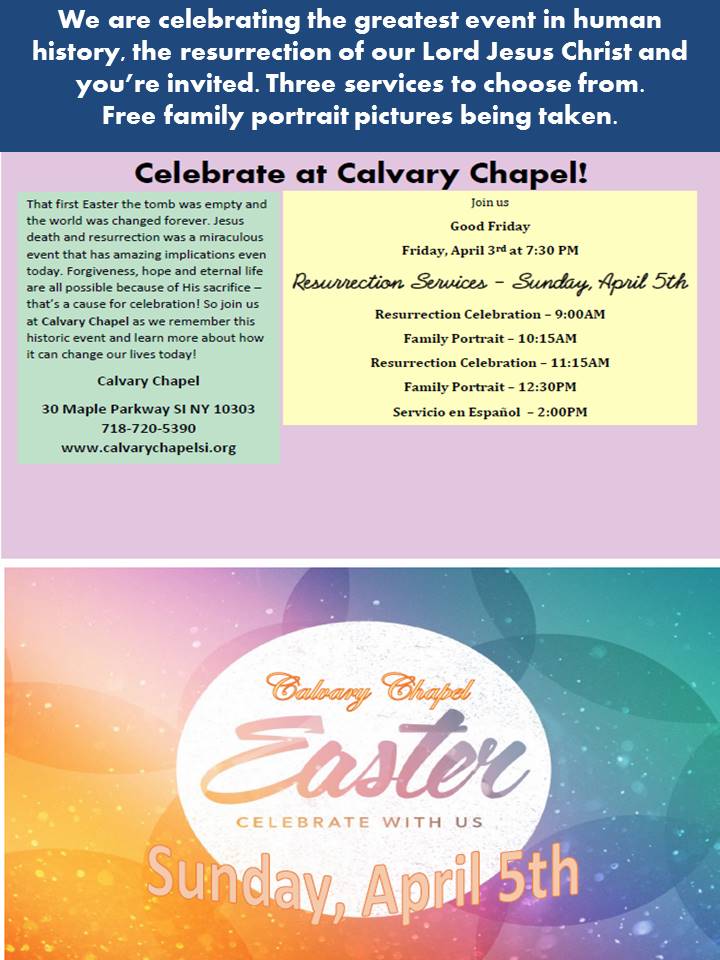
Please join us tonight, Friday, April 3rd , from 7:30 P.M. – 8:45 P.M. for our Good Friday Service. We will be concluding our series “The People We Meet on the Journey to The Cross” and commemorating our Lord’s amazing sacrifice with songs and the celebration of communion.

Lenten Reading for Thursday, April 2, 2015

Luke 23:1–25 (ESV)

1 Then the whole company of them arose and brought him before Pilate. 2 And they began to accuse him, saying, “We found this man misleading our nation and forbidding us to give tribute to Caesar, and saying that he himself is Christ, a king.” 3 And Pilate asked him, “Are you the King of the Jews?” And he answered him, “You have said so.” 4 Then Pilate said to the chief priests and the crowds, “I find no guilt in this man.” 5 But they were urgent, saying, “He stirs up the people, teaching throughout all Judea, from Galilee even to this place.” 6 When Pilate heard this, he asked whether the man was a Galilean. 7 And when he learned that he belonged to Herod’s jurisdiction, he sent him over to Herod, who was himself in Jerusalem at that time. 8 When Herod saw Jesus, he was very glad, for he had long desired to see him, because he had heard about him, and he was hoping to see some sign done by him. 9 So he questioned him at some length, but he made no answer. 10 The chief priests and the scribes stood by, vehemently accusing him. 11 And Herod with his soldiers treated him with contempt and mocked him. Then, arraying him in splendid clothing, he sent him back to Pilate. 12 And Herod and Pilate became friends with each other that very day, for before this they had been at enmity with each other. 13 Pilate then called together the chief priests and the rulers and the people, 14 and said to them, “You brought me this man as one who was misleading the people. And after examining him before you, behold, I did not find this man guilty of any of your charges against him. 15 Neither did Herod, for he sent him back to us. Look, nothing deserving death has been done by him. 16 I will therefore punish and release him.” 18 But they all cried out together, “Away with this man, and release to us Barabbas”— 19 a man who had been thrown into prison for an insurrection started in the city and for murder. 20 Pilate addressed them once more, desiring to release Jesus, 21 but they kept shouting, “Crucify, crucify him!” 22 A third time he said to them, “Why, what evil has he done? I have found in him no guilt deserving death. I will therefore punish and release him.” 23 But they were urgent, demanding with loud cries that he should be crucified. And their voices prevailed. 24 So Pilate decided that their demand should be granted. 25 He released the man who had been thrown into prison for insurrection and murder, for whom they asked, but he delivered Jesus over to their will.

Hypotheticals

image

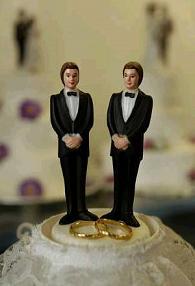
As a pastor should I be  forced to marry two people my conscience says can’t get get married? If I was a lawyer should I be forced to provide a divorce for reasons that are against my convictions? If I was a doctor should I be forced to perform an abortion even though my faith calls it a horrible sin? It would be wrong as a pastor, lawyer or doctor not to help someone because of who they are. That would be discrimination. However I should have the right to follow my conscience with reference to my participation in something with someone – a marriage, a divorce or a termination of a pregnancy for example.  That’s not discrimination it’s discretion.

If I can’t make that determination, the determination of participation, I can no longer be who I am. I am being forced to be hypocritical. Someones right to be who they are can’t trump my right to be who I am.

Doesn’t this same concept apply to a baker, a florist, a jeweler or a catering hall owner? If not, why not?

@kilmeade
@KMCRadio
@KirstenPowers

Hallelujah, What A Savior

last saying of Jesuspassion of the ChristKilling Jesus

The Hidden “Passion” of the Christ

It has been over ten years since the release of the movie, “The Passion of the Christ “, Mel Gibson’s epic film that depicts the suffering of Jesus at his execution by crucifixion. This movie is a fairly accurate portrayal of the Scriptural account of the death and resurrection of Jesus Christ. Because of this accuracy, the scenes of the scourging of Christ and the crucifixion are quite brutal and violent. Since that time there have been a few other books and movies (Bill O’Reilly’s recent book and movie “Killing Jesus” and Stu Epperson’s book “The last Words of Jesus” to name a few) that have attempted to capture the suffering that Christ endured in His brutal death. Each of these producers/authors have done an exceptional job and I commend their works to you regarding Christ’s physical suffering.

In my simple reading of the Biblical narratives I never picked up on the graphic nature of Christ’s physical suffering. The Gospel writers, to a certain extent, skip over most of the gory details. I believe I know why they don’t emphasize the deep physical suffering of Christ. It is because, in fact, there is a greater suffering that our Lord went through than the physical.

To comprehend this we must first understand that God is perfectly holy and that man is hopelessly sinful. We sin by nature and we sin by choice. We must also understand that a holy and just God requires that sin be punished and judged. We must also remember that from His holiness flows His love for us, as well as His grace and mercy that He pours out on our lives.

In the Jewish Scriptures which we call the Old Testament, we learn that “the soul that sins it shall die” (Ezekiel 3:10) and in the New Testament we learn that “the wages of sin is death” (Romans 6:23). This death is more than a physical death. It is a spiritual death, a separation from God both now and for eternity. We call this eternal separation “damnation”. To pay the penalty for my sins and yours, as well as for the sins of all mankind, Jesus Christ needed to experience not just a physical death but a spiritual death, a separation from God. He had to experience God’s punishment for sin for us in our place (This is called the substitutionary atonement).

Is there any evidence that Jesus Christ suffered this separation and judgment during His Passion? We need look no further than to the hours of noon to three, as Christ hung on the cross, for the answer. The Biblical text describing this time in Matthew 27:45-46 reads: “Now from the sixth hour until the ninth hour there was darkness over all the land. And about the ninth hour Jesus cried out with a loud voice, saying, “Eli, Eli, lama sabachthani?” that is, “My God, My God, why have You forsaken Me?”

During this time, Jesus Christ is the “Sin Offering” for the world. The Apostle Paul sheds light on this when he tells us “For He made Him who knew no sin to be sin for us, that we might become the righteousness of God in Him. (2 Corinthians 5:21). The Apostle Peter echoes his statement saying “who Himself bore our sins in His own body on the tree, that we, having died to sins, might live for righteousness – by whose stripes you were healed (1 Peter 2:24). The Apostle John tells us “And He Himself is the propitiation (the appeasement of God’s wrath) for our sins, and not for ours only but also for the whole world.” (1 John 2:2).

Jesus Christ was sinless yet He is made sin. He never lied yet He is made a liar. He never blasphemed, but he is made a blasphemer. He never abused anyone but He is accounted an abuser. He never stole but He is accounted a thief. He never had an impure thought but He is accounted an adulterer. He was a man of peace but He is made a murderer. This in itself was worse than the physical beating He received. To be sinless as Christ was and then to bear all our sin must have been hideous beyond our understanding. But there was more.

When Jesus cries out “My God, My God why have you forsaken me,” He is bemoaning His separation from the Father. God has turned away from His Son. This is a quote from Psalm 22:1-2. The answer to the question is found in Psalm 22:3 which reads “But You are Holy.” A holy God could not fellowship with His Son, for during this time Jesus was bearing our sins as well as paying the penalty for them. The prophet Isaiah tells us “Yet it pleased the Lord to bruise Him; He has put Him to grief. When You make His soul an offering for sin.” The word “bruise” means, “to crush.” It seems that Jesus’ very being was made an offering to atone for our sins. His soul was being crushed in the winepress of the wrath of God. The depth of that pain is something that is impossible for us to fully grasp.      On the cross, this eternal person, Jesus Christ, was suffering the eternal punishment of a holy God for what must have seemed like an eternity on account of my sin and yours as well as for the sins of all mankind. We cannot imagine what this must have been like. Yes, men have been beaten and crucified in the manner Jesus was in Gibson’s “The Passion of the Christ.” Even some innocent individuals may have experienced such a death (though none were sinless like Christ). What makes Christ’s suffering so unique and redemptive is that He took on himself the sins of mankind and bore not just the wrath of man or of a human government but the wrath of a holy God. Then He cried “it is finished”, completing His work of redemption for us. There is no way that this event could ever be portrayed to its fullest in a book or on film, even with the most artful use of the written word, the work of the most skilled actors, extremely realistic special effects, or an unlimited budget.

We should be very grateful for the physical suffering of Christ that has been written about and portrayed for us by many. We should be even more grateful for His suffering that is unseen and which cannot be depicted.

During this “Holy Week” when we intensify our focus upon Jesus’ indescribable suffering for us, we cannot help but want to sing — and even shout — the words of the hymn writer,   “Hallelujah, What a Savior.”

HallelujahWhataSavior-l

Blessings,

Pastor Dave Watson

Tolerance for others?

When those who claim that tolerance is a virtue to be embraced by a civil society in terms of accepting individuals and their lifestyles refuse to embrace the virtue of tolerance when dealing with others and their viewpoints they demonstrate that proclaiming the need to embrace tolerance is not a deeply held conviction on their part but only an effective strategy for exploitation in a world where the ends justify the means.

Lenten Reading for Wednesday, April 1, 2015

Luke 22:1–69 (ESV)

1 Now the Feast of Unleavened Bread drew near, which is called the Passover. 2 And the chief priests and the scribes were seeking how to put him to death, for they feared the people. 3 Then Satan entered into Judas called Iscariot, who was of the number of the twelve. 4 He went away and conferred with the chief priests and officers how he might betray him to them. 5 And they were glad, and agreed to give him money. 6 So he consented and sought an opportunity to betray him to them in the absence of a crowd. 7 Then came the day of Unleavened Bread, on which the Passover lamb had to be sacrificed. 8 So Jesus sent Peter and John, saying, “Go and prepare the Passover for us, that we may eat it.” 9 They said to him, “Where will you have us prepare it?” 10 He said to them, “Behold, when you have entered the city, a man carrying a jar of water will meet you. Follow him into the house that he enters 11 and tell the master of the house, ‘The Teacher says to you, Where is the guest room, where I may eat the Passover with my disciples?’ 12 And he will show you a large upper room furnished; prepare it there.” 13 And they went and found it just as he had told them, and they prepared the Passover. 14 And when the hour came, he reclined at table, and the apostles with him. 15 And he said to them, “I have earnestly desired to eat this Passover with you before I suffer. 16 For I tell you I will not eat it until it is fulfilled in the kingdom of God.” 17 And he took a cup, and when he had given thanks he said, “Take this, and divide it among yourselves. 18 For I tell you that from now on I will not drink of the fruit of the vine until the kingdom of God comes.” 19 And he took bread, and when he had given thanks, he broke it and gave it to them, saying, “This is my body, which is given for you. Do this in remembrance of me.” 20 And likewise the cup after they had eaten, saying, “This cup that is poured out for you is the new covenant in my blood. 21 But behold, the hand of him who betrays me is with me on the table. 22 For the Son of Man goes as it has been determined, but woe to that man by whom he is betrayed!” 23 And they began to question one another, which of them it could be who was going to do this. 24 A dispute also arose among them, as to which of them was to be regarded as the greatest. 25 And he said to them, “The kings of the Gentiles exercise lordship over them, and those in authority over them are called benefactors. 26 But not so with you. Rather, let the greatest among you become as the youngest, and the leader as one who serves. 27 For who is the greater, one who reclines at table or one who serves? Is it not the one who reclines at table? But I am among you as the one who serves. 28 “You are those who have stayed with me in my trials, 29 and I assign to you, as my Father assigned to me, a kingdom, 30 that you may eat and drink at my table in my kingdom and sit on thrones judging the twelve tribes of Israel. 31 “Simon, Simon, behold, Satan demanded to have you, that he might sift you like wheat, 32 but I have prayed for you that your faith may not fail. And when you have turned again, strengthen your brothers.” 33 Peter said to him, “Lord, I am ready to go with you both to prison and to death.” 34 Jesus said, “I tell you, Peter, the rooster will not crow this day, until you deny three times that you know me.” 35 And he said to them, “When I sent you out with no moneybag or knapsack or sandals, did you lack anything?” They said, “Nothing.” 36 He said to them, “But now let the one who has a moneybag take it, and likewise a knapsack. And let the one who has no sword sell his cloak and buy one. 37 For I tell you that this Scripture must be fulfilled in me: ‘And he was numbered with the transgressors.’ For what is written about me has its fulfillment.” 38 And they said, “Look, Lord, here are two swords.” And he said to them, “It is enough.” 39 And he came out and went, as was his custom, to the Mount of Olives, and the disciples followed him. 40 And when he came to the place, he said to them, “Pray that you may not enter into temptation.” 41 And he withdrew from them about a stone’s throw, and knelt down and prayed, 42 saying, “Father, if you are willing, remove this cup from me. Nevertheless, not my will, but yours, be done.” 43 And there appeared to him an angel from heaven, strengthening him. 44 And being in an agony he prayed more earnestly; and his sweat became like great drops of blood falling down to the ground. 45 And when he rose from prayer, he came to the disciples and found them sleeping for sorrow, 46 and he said to them, “Why are you sleeping? Rise and pray that you may not enter into temptation.” 47 While he was still speaking, there came a crowd, and the man called Judas, one of the twelve, was leading them. He drew near to Jesus to kiss him, 48 but Jesus said to him, “Judas, would you betray the Son of Man with a kiss?” 49 And when those who were around him saw what would follow, they said, “Lord, shall we strike with the sword?” 50 And one of them struck the servant of the high priest and cut off his right ear. 51 But Jesus said, “No more of this!” And he touched his ear and healed him. 52 Then Jesus said to the chief priests and officers of the temple and elders, who had come out against him, “Have you come out as against a robber, with swords and clubs? 53 When I was with you day after day in the temple, you did not lay hands on me. But this is your hour, and the power of darkness.” 54 Then they seized him and led him away, bringing him into the high priest’s house, and Peter was following at a distance. 55 And when they had kindled a fire in the middle of the courtyard and sat down together, Peter sat down among them. 56 Then a servant girl, seeing him as he sat in the light and looking closely at him, said, “This man also was with him.” 57 But he denied it, saying, “Woman, I do not know him.” 58 And a little later someone else saw him and said, “You also are one of them.” But Peter said, “Man, I am not.” 59 And after an interval of about an hour still another insisted, saying, “Certainly this man also was with him, for he too is a Galilean.” 60 But Peter said, “Man, I do not know what you are talking about.” And immediately, while he was still speaking, the rooster crowed. 61 And the Lord turned and looked at Peter. And Peter remembered the saying of the Lord, how he had said to him, “Before the rooster crows today, you will deny me three times.” 62 And he went out and wept bitterly. 63 Now the men who were holding Jesus in custody were mocking him as they beat him. 64 They also blindfolded him and kept asking him, “Prophesy! Who is it that struck you?” 65 And they said many other things against him, blaspheming him. 66 When day came, the assembly of the elders of the people gathered together, both chief priests and scribes. And they led him away to their council, and they said, 67 “If you are the Christ, tell us.” But he said to them, “If I tell you, you will not believe, 68 and if I ask you, you will not answer. 69 But from now on the Son of Man shall be seated at the right hand of the power of God.”

Defining hypocrisy

image

In the dictionary under the word “hypocrite” should be a picture of Apple CEO Tim Cook. He castigated Indiana for its Religious Freedom Act saying it may discriminate against LGBT individuals and he doesn’t want to do business there. Yet he opens a plant in Saudi Arabia where they punish gays with 40 plus lashes. Really Tim, Really.

Since doing business with you requires agreeing with your views on social issues may I suggest you offer to buy back apple phones from all those people in all those states that have similar laws to Indiana and who don’t agree with you. Be sure also to close the plants in China and Saudi Arabia and any other place you find objectionable.

http://www.bloombergview.com/articles/2015-03-30/tim-cook-is-wrong-on-indiana-and-religious-freedom-laws